

You’ve counted calories, cut carbs, skipped meals, and white-knuckled your way through weeks of restriction. You lost some weight. Then you gained it all back, plus a few extra pounds. And somehow you blamed yourself. Most women have been through this exact cycle more than once.
But the problem was never your willpower. Restrictive dieting actually works against your body. It slows your metabolism, spikes your stress hormones, and creates intense cravings that make overeating almost inevitable. Research shows that 95% of traditional diets fail within five years. The system is broken, not you.
There’s a simpler path that doesn’t involve meal plans, calorie tracking, or cutting out entire food groups. It starts with eating real food. Whole, unprocessed foods naturally regulate your appetite, stabilize your energy, and support the hormones that control your weight. This post breaks down the science behind why real food works better than dieting for women, and walks you through practical steps to make the switch without overhauling your entire life.
Why Real Food Works Better Than Dieting for Women’s Weight Loss
The Science Behind Real Food and Natural Satiety
Your body already knows how to tell you when you’ve had enough to eat. You just need to feed it the right foods to hear those signals clearly.
Whole foods work with your biology, not against it. When you eat an apple, a piece of grilled chicken, or a bowl of lentil soup, your body receives fiber, protein, and water in combinations that trigger powerful fullness hormones like leptin and GLP-1. These hormones tell your brain you’re satisfied, and they do it naturally without you needing to count a single calorie. The fiber in whole foods physically fills your stomach and slows digestion, giving those satiety signals plenty of time to kick in before you overeat.
Processed foods work completely differently. Food manufacturers have spent billions of dollars figuring out exactly how to make you want more. They engineer combinations of sugar, fat, and salt that hit your taste buds in ways that don’t exist in nature. These combinations literally bypass your body’s natural fullness signals. Your brain gets confused because it’s receiving pleasure signals without the corresponding nutrient signals that say “okay, we’re good, stop eating now.”
Think about it. Have you ever eaten an entire bag of chips without meaning to? That’s not a willpower problem. Those chips were designed to keep you reaching for more.
The research backs this up in a big way. Studies show that women eating whole food diets naturally consume about 500 fewer calories each day compared to when they eat processed foods. They’re not trying to eat less. They’re not suffering through hunger pangs. They just feel satisfied sooner and stay satisfied longer.
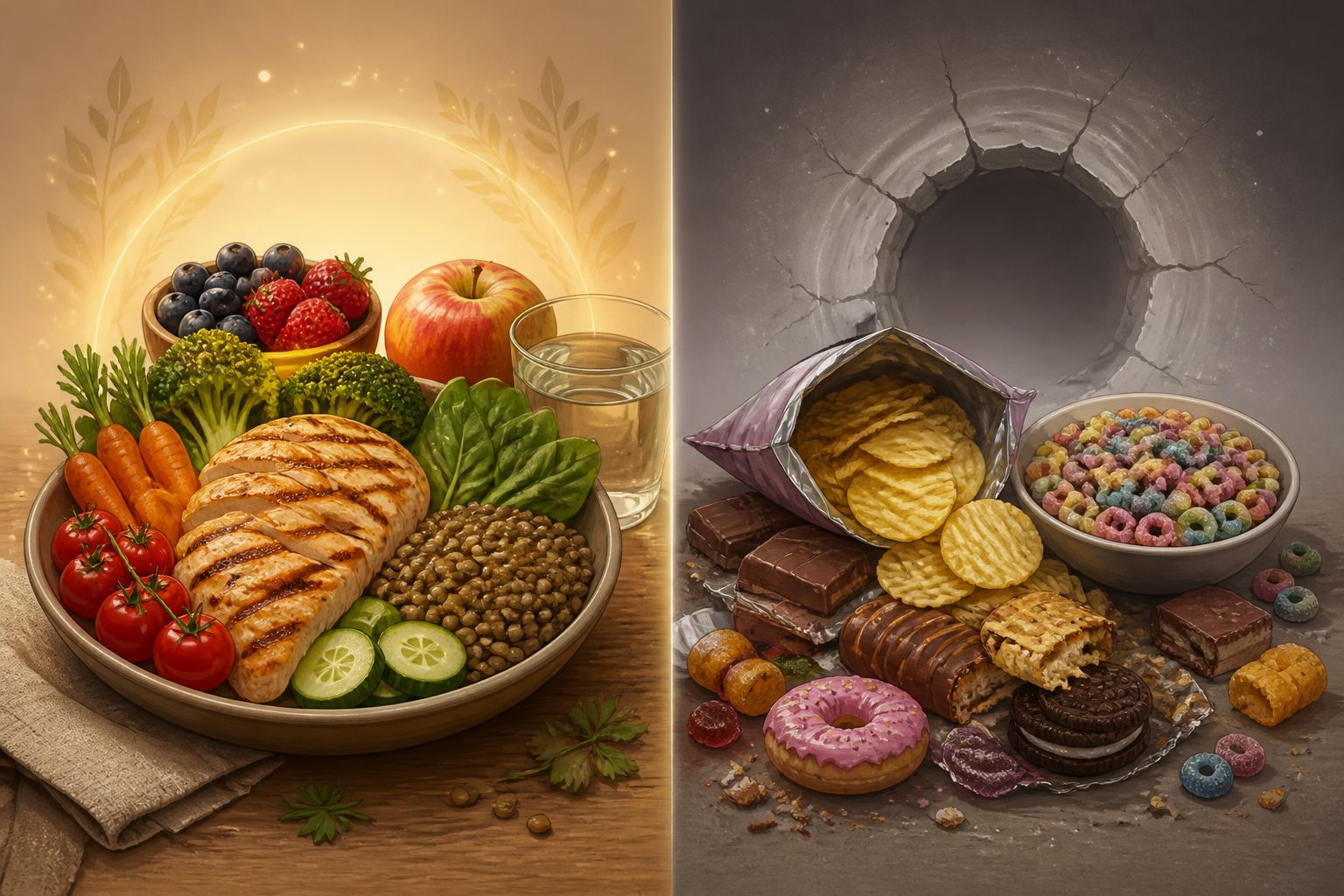
Real foods also keep your blood sugar stable throughout the day. When you eat processed carbs like white bread or sugary cereal, your blood sugar spikes fast and crashes hard. That crash leaves you exhausted, cranky, and desperately craving more sugar or caffeine to feel normal again. You end up eating way more than your body needs just trying to manage your energy levels. Whole foods release their energy slowly and steadily, so you avoid that roller coaster completely.
How Dieting Disrupts Women’s Hormones and Metabolism
Every time you go on a restrictive diet, your body thinks you’re starving. And it fights back hard.
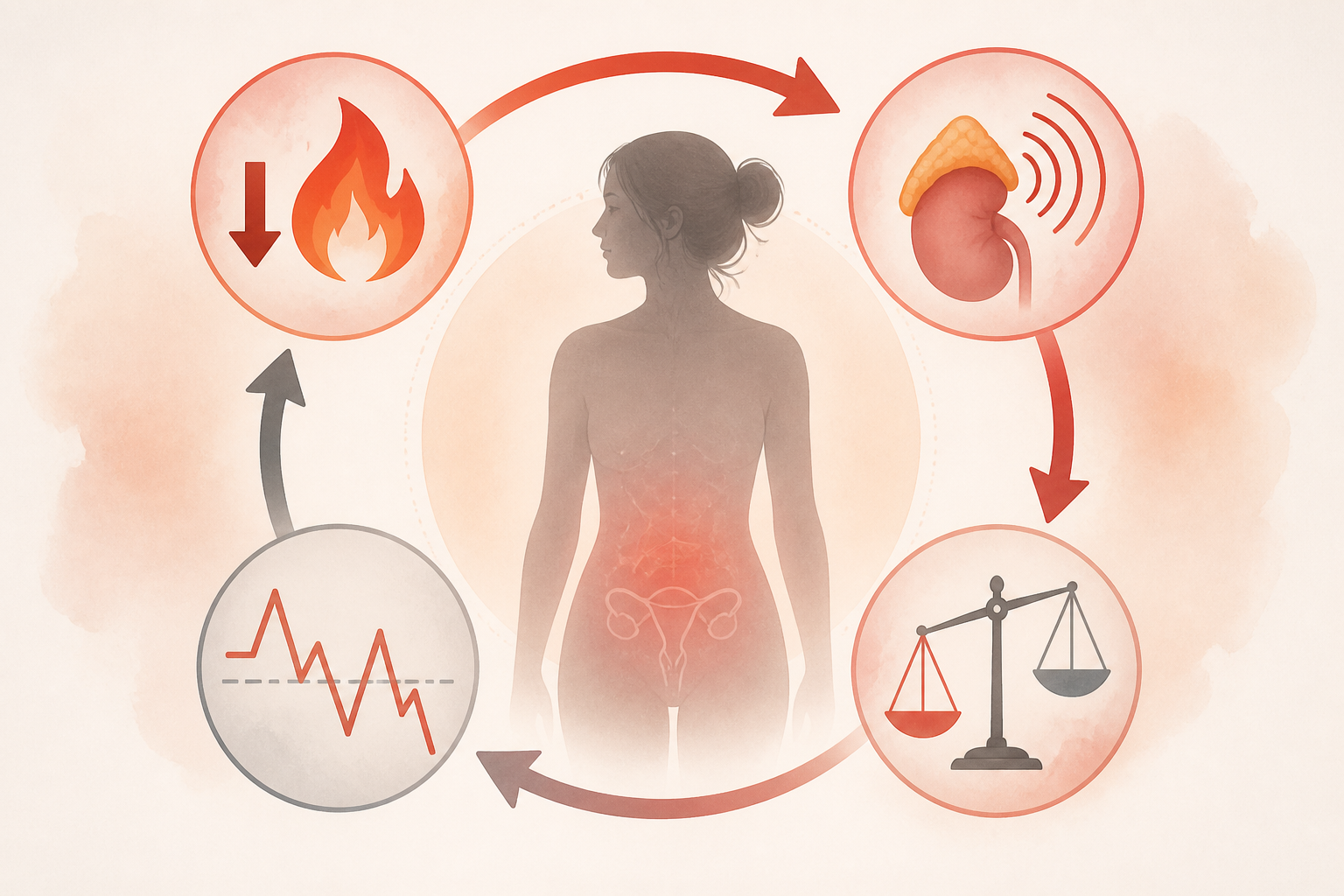
Calorie restriction messes with your thyroid in ways that make weight loss increasingly difficult. When you dramatically cut calories, your body reduces production of T3, the active thyroid hormone that controls your metabolic rate. We’re talking about a 20 to 30 percent drop in metabolism. Your body literally starts burning fewer calories at rest, making it harder to lose weight even while you’re still restricting food. This is why you can eat less and less yet stop seeing results.
Women’s bodies are especially sensitive to calorie restriction because of how it affects cortisol. Dieting is stressful, and stress raises cortisol. High cortisol tells your body to hold onto fat, particularly around your midsection. You’re working so hard to lose weight, and your stress hormones are working just as hard to keep it on.
The hormone disruption goes even deeper. Chronic dieting throws off estrogen and progesterone, the hormones that regulate your menstrual cycle and play major roles in how your body handles weight. Women who diet repeatedly often notice irregular periods, worse PMS, and stubborn weight that won’t budge no matter what they try. Your reproductive system is telling you something is wrong.
Maybe worst of all, the restrict-binge cycle completely destroys your natural hunger and fullness cues. When you’re constantly overriding your body’s signals, telling yourself you can’t eat when you’re hungry or forcing yourself to stop at some arbitrary calorie limit when you’re still unsatisfied, you lose the ability to recognize what true physical hunger even feels like. You start eating by rules and numbers instead of listening to your body. That disconnect makes sustainable weight loss nearly impossible.
The Psychological Freedom of Eating Real Food
Diet culture puts a ridiculous amount of mental weight on your shoulders. The constant rules drain you.
When you remove food restrictions and just focus on eating real, nourishing foods, something shifts mentally. The psychological burden lifts. You’re not spending energy tracking every bite, weighing portions, or calculating whether you have enough points left for dinner. That mental space opens up for other things in your life that actually matter.
Food rules create stress. Stress creates emotional eating. You end up eating to cope with the anxiety that dieting itself created. It’s a terrible cycle that sabotages your weight loss efforts from the inside out.
Women who switch to real food eating consistently report feeling better about their bodies and themselves. When you shift your focus from deprivation to nourishment, from restriction to abundance, your entire relationship with food changes. You start seeing food as something that supports you rather than something you need to fight against. That mindset shift matters more than any meal plan ever could.
The concept of forbidden foods creates problems all by itself. Tell yourself you can never have bread again, and suddenly bread is all you think about. Eventually you break down, eat way too much bread, feel guilty and defeated, and either give up entirely or double down on restriction. Real food eating doesn’t forbid anything. Some foods just aren’t real food, so you naturally eat them less often. But there’s no moral judgment attached. No guilt. No failure. That absence of restriction removes the psychological trigger for binge eating.
Long-Term Sustainability vs. Quick-Fix Diets
Here’s the hard truth about diets. About 95 percent of them fail within one to five years. Most women end up heavier than when they started.
Quick fixes don’t work because they’re not designed to work forever. You can white-knuckle your way through six weeks of shakes or a month of cutting carbs, but you can’t live that way for years. Eventually life happens. You go on vacation, deal with a stressful work period, or just get tired of suffering. The diet ends, the weight comes back, and often brings extra pounds with it because your metabolism is now slower than when you started.
Real food eating is completely different. It’s not a temporary intervention with a start and end date. It’s just how you eat now. You can do it at restaurants, at holiday gatherings, and on random Tuesday nights when you’re too tired to think. It bends and flexes with your life instead of demanding your life revolve around it.
You can maintain your social life without derailing progress. You can have dinner with friends, enjoy family gatherings, and eat birthday cake at your kid’s party without guilt or the feeling that you’ve blown everything. The flexibility built into real food eating means you never have that “I already messed up so I might as well eat everything” moment that tanks traditional diets.
Real food eating also scales naturally with the changes women go through. Pregnancy, postpartum, perimenopause, menopause, aging – your nutritional needs shift through all these phases, but the basic principle stays the same. Eat real food that nourishes your body. You don’t need to learn a whole new diet system every time your hormones shift or your life circumstances change.
How to Transition to Real Food Eating for Weight Loss Success
Identifying and Swapping Processed Foods
The simplest way to start eating real food is learning to read ingredient lists. Pick up any package in your kitchen right now and flip it over. Real food has one to five ingredients, and you can pronounce all of them. An apple is an apple. Plain oats are just oats. Greek yogurt should list milk and live cultures, nothing else.
Processed foods, on the other hand, read like a chemistry experiment. You’ll find words you can’t pronounce, chemical additives, preservatives, and artificial flavors designed to keep food shelf-stable for months. If the ingredient list looks like it belongs in a lab rather than a kitchen, put it back.
Start with your grains. That white bread and regular pasta you’ve been eating? They’re stripped of fiber and nutrients, leaving you hungry an hour after eating. Swap them for whole grain alternatives. Choose quinoa, brown rice, and steel-cut oats that actually satisfy you and provide sustained energy throughout your day. Your blood sugar will thank you.
Your snack drawer probably needs the biggest overhaul. Those chips, crackers, and candy bars are engineered to make you want more. Replace them with whole food options that naturally stop you from overeating. Grab a handful of almonds instead of chips. Slice an apple with almond butter instead of reaching for candy. Buy plain Greek yogurt and add your own fruit instead of those sugar-packed flavored cups that contain more dessert than protein.
Look at your proteins too. Processed deli meats, hot dogs, and packaged chicken nuggets are loaded with nitrates, fillers, and sodium that bloat you and mess with your hormones. Choose whole protein sources like actual eggs you crack yourself, fish fillets, chicken breasts, and dried beans or lentils. Yes, they take a few more minutes to prepare, but your body actually recognizes them as food.
Building Balanced Real Food Meals
Creating satisfying meals doesn’t require complicated recipes or measuring every ounce. Think in simple components instead. Every meal needs three basic parts: quality protein about the size of your palm, fiber-rich vegetables covering half your plate, and healthy fats roughly the size of your thumb.
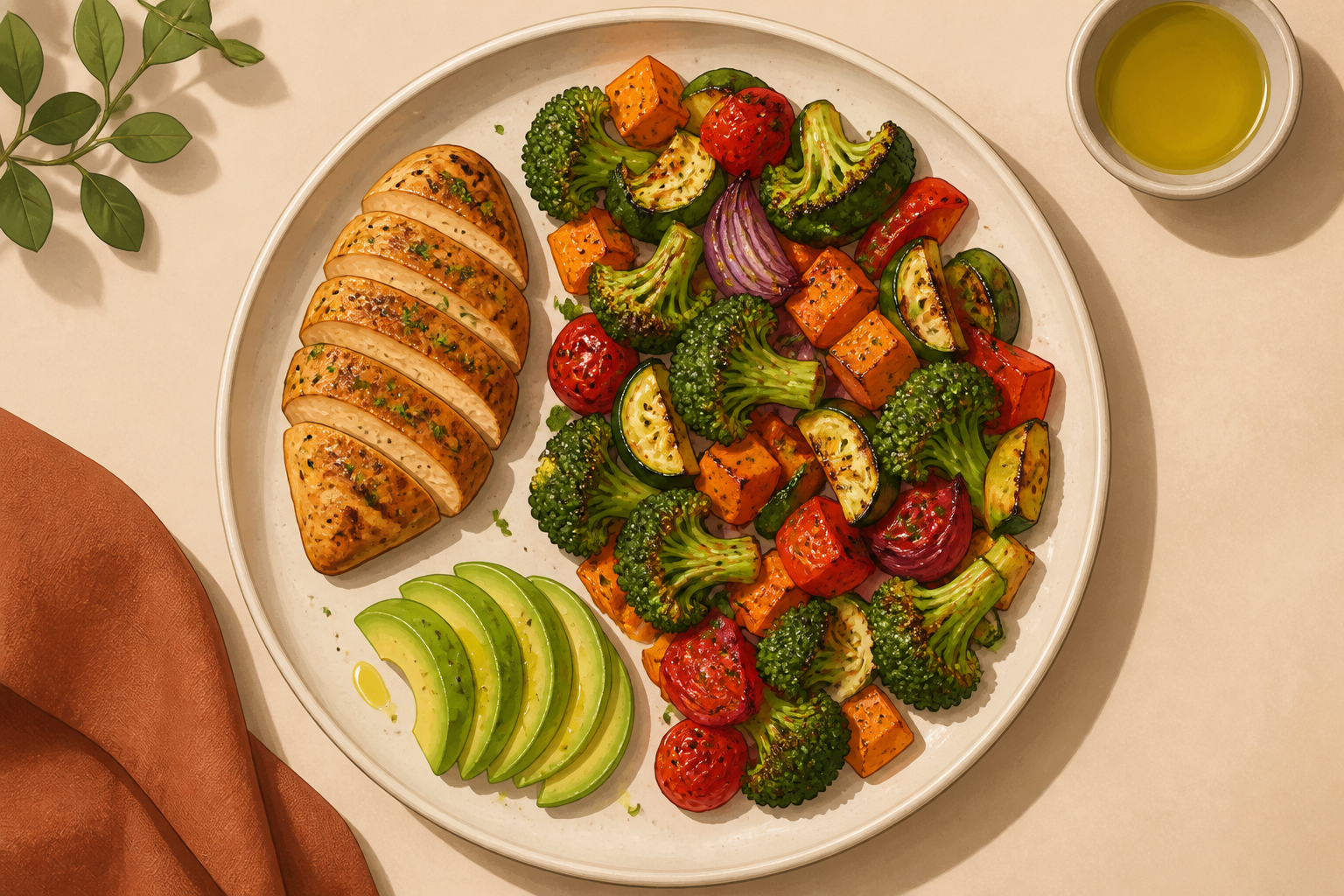
This formula works for breakfast, lunch, and dinner. Scrambled eggs (protein) with sautéed spinach (vegetables) cooked in a bit of butter (fat). Grilled chicken (protein) over a huge salad (vegetables) with olive oil dressing (fat). Baked salmon (protein) with roasted broccoli (vegetables) and half an avocado on the side (fat). See how straightforward this gets?
Don’t fear carbohydrates. Your body needs them, especially if you’re menstruating, exercising, or just trying to function without being hungry all day. Include complex carbohydrates from whole sources like sweet potatoes, black beans, chickpeas, and intact grains. These support your energy levels and keep your hormones balanced. Women who cut carbs too low often see their periods disappear and their weight loss stall completely.
Vegetables deserve special attention because they’re your secret weapon. They add volume and nutrients while keeping calories naturally lower. You can eat a huge plate of roasted vegetables and feel completely satisfied without that stuffed, uncomfortable feeling. Aim to fill half your plate with them at every meal. Spinach, broccoli, cauliflower, bell peppers, zucchini, Brussels sprouts. Mix them up so you don’t get bored.
Those healthy fats might feel scary if you’ve been stuck in the low-fat diet mentality, but they’re absolutely necessary. Avocados, olive oil, nuts, seeds, and fatty fish increase satiety so you’re not hunting through the pantry an hour after dinner. They also support hormone production, which is critical for women trying to lose weight without wrecking their metabolism.

If you want real‑food meals that are simple, delicious, and actually help you lose weight naturally, I created The Real Food Kitchen Recipe Guide. It includes 20 whole‑food recipes, a complete grocery shopping list, a clear nutritional breakdown, and 5 unique Complete‑in‑3 snack options to make healthy eating effortless.
Grab your guide here: The Real Food Kitchen Recipe Guide
Practical Shopping and Meal Preparation Strategies
Your grocery store is designed to make you buy processed food. The interior aisles are packed with boxes, bags, and packages that can sit on shelves forever. Shop the perimeter instead. That’s where you’ll find produce, meat, eggs, and dairy. The actual food that spoils because it’s real.
Weekends are your friend here. Spending two hours on Sunday cooking can save you from a week of takeout and processed convenience foods.
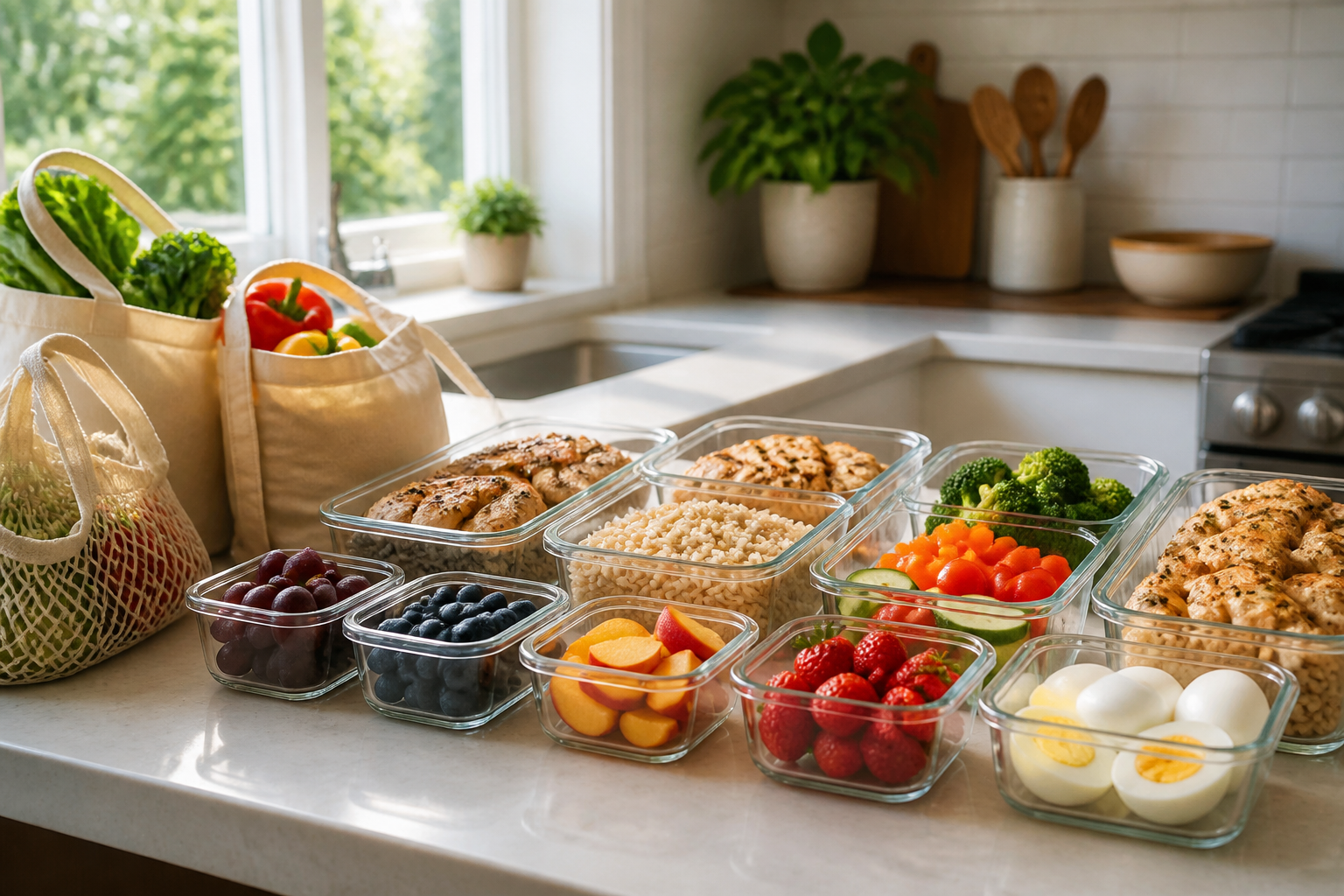
Batch cook proteins like grilled chicken breasts, hard-boiled eggs, or a big pot of beans. Cook a few servings of quinoa or brown rice. Chop vegetables and store them in clear containers so you can see them when you open the fridge. When everything’s ready to grab, you’ll actually eat it.
Life gets crazy. You will have those days when you forgot to defrost dinner and everyone’s starving. Keep emergency real food options on hand for exactly these moments. Hard-boiled eggs last a week in the fridge. Pre-cut vegetables with hummus take zero effort. Canned wild-caught salmon or sardines (yes, really) provide quick protein. Frozen fruit and spinach don’t go bad and blend into smoothies in two minutes.
Planning helps, but perfection kills progress. Aim to plan about 80% of your meals while leaving 20% flexible for life. Birthday dinners happen. Your coworker brings donuts. You get invited to happy hour. Building in flexibility from the start means you won’t feel like you’ve “blown it” and end up eating everything in sight.
Listening to Your Body’s Hunger and Fullness Cues
Years of dieting have probably disconnected you from your body’s actual signals. You’ve been eating by the clock, by calorie budgets, by whatever rules your latest diet imposed. Time to reconnect.
Real hunger shows up physically. Your stomach growls. Your energy dips. You might feel a little lightheaded or find it harder to concentrate. That’s your body saying it needs fuel. Eat then, even if it’s not “mealtime” according to some arbitrary schedule.
Stop eating when you feel comfortably full, not stuffed. On a scale of one to ten, where one is ravenous and ten is Thanksgiving-dinner-stuffed, aim to stop around a seven or eight. You should feel satisfied and energized, not uncomfortable. Here’s the thing that makes this easier: you can eat again when you get hungry. Food isn’t going anywhere. You’re not restricting.
Eating slowly makes a huge difference because it takes about 20 minutes for satiety signals to travel from your stomach to your brain. Put your fork down between bites. Actually chew your food. Turn off the TV and step away from your phone. When you’re distracted, you can demolish an entire meal without noticing and still feel unsatisfied.
Learn to spot the difference between physical hunger and emotional hunger. Physical hunger builds gradually and can be satisfied with any food. Emotional hunger hits suddenly and demands specific comfort foods. Before you eat, pause for ten seconds and ask yourself what you really need. Sometimes it’s food. Sometimes it’s water, rest, a walk outside, or a conversation with a friend.
Navigating Challenges and Social Situations
Restaurants don’t have to derail everything. Look for grilled, baked, or roasted proteins instead of fried options. Order extra vegetables as your side instead of fries. Ask for sauces and dressings on the side so you control how much goes on your plate. Most restaurants will accommodate simple requests without making a fuss.
Social gatherings get easier when you take some control. Bring a real food dish to parties and potlucks. That way, you know there’s at least one nourishing option available, and you’re contributing something everyone can enjoy. A big colorful salad, a vegetable tray with guacamole, or grilled chicken skewers always disappear quickly.
How you talk about your eating matters more than you think. When people ask why you’re not eating the cake or grabbing pizza, skip the diet talk. Say something like “I’m choosing foods that make me feel good” or “I ate earlier, and I’m satisfied right now.” Frame it as self-care rather than restriction, and suddenly it’s not up for debate or judgment.
Here’s the most important part: occasional processed foods won’t ruin your progress. You can eat birthday cake at your kid’s party. You can enjoy pizza with friends on Friday night. You don’t need to “make up for it” by skipping meals the next day or doing extra workouts. Consistency over time is what matters, not perfection in every moment. The goal is making real food your normal, default choice most of the time while still living your actual life.